You get back to the parking lot after a long day, slide into your automatic car, turn the key, and nothing happens except a weak click. Your first instinct might be to try rolling it to pop-start it the way you’ve seen done with manual cars in movies, but that trick simply doesn’t work on an automatic.
Automatic transmissions rely on a completely different mechanism to connect the engine to the wheels, which means a dead battery in an automatic car leaves you with only a couple of real options. Knowing exactly what those options are, and how to use them safely, can turn a stressful roadside moment into a five-minute fix, or tell you when it’s time to call jump start service in Dubai instead.
Why You Can’t Push-Start an Automatic Car
Manual cars can sometimes be pop-started because the clutch allows the engine to be mechanically spun by the car’s forward momentum, which can kick the engine into life even without battery power. Automatic transmissions don’t have that direct mechanical link.
- They rely on a torque converter and a hydraulic pump, both of which need the engine already running to build pressure
- Rolling or pushing the car does nothing to turn the engine over
- Attempting it just wastes time and risks the car rolling into traffic or an obstacle
Because of this, a jump start (or a tow) is really the only practical way to get a dead automatic running again.
What You’ll Need to Jump-Start an Automatic Car
Before attempting anything, it helps to have the right equipment on hand rather than improvising halfway through. The two most common setups are jumper cables with a donor vehicle, or a portable jump starter pack.
- A set of jumper cables in good condition, with no exposed or frayed wiring
- A second working vehicle with a healthy battery, if you’re not using a jump starter pack
- Gloves and eye protection, since battery acid exposure is a real possibility with older batteries
- The car’s manual, to check for any model-specific jump-starting notes, especially on hybrids
Step-by-Step: Jumping an Automatic Car Safely
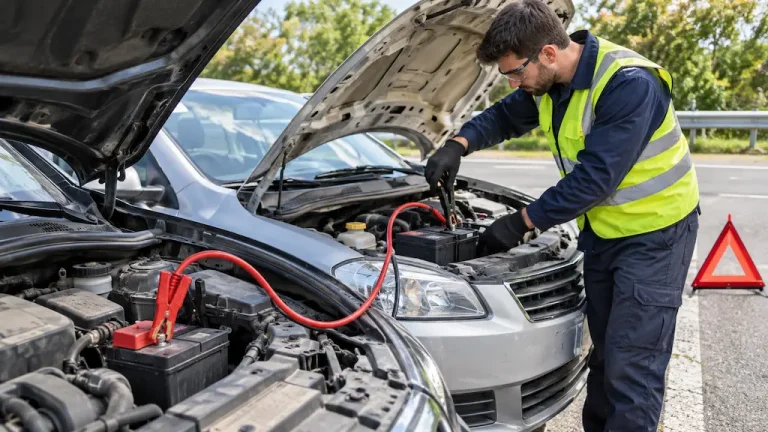
Once you have the right equipment, the process itself is straightforward if you follow the steps in order. we recommended procedure includes positioning the two vehicles so they don’t touch, turning off both ignitions, setting the parking brakes, and placing the automatic transmission in Park before connecting anything.
- Park the donor car close enough for the cables to reach, but make sure the two vehicles aren’t touching
- Turn off both engines and all electrical accessories, set the parking brakes, and shift the automatic into Park
- Connect the red clamp to the positive terminal of the dead battery, then the other red clamp to the positive terminal of the donor battery
- Connect the black clamp to the negative terminal of the donor battery, then the final black clamp to an unpainted metal surface on the dead car’s engine block, not the battery itself
- Start the donor car and let it run for two to three minutes to allow some charge to transfer
- Try starting the automatic car; if it doesn’t start on the first try, wait another minute before trying again
- Once it starts, remove the cables in the exact reverse order you connected them
After a successful jump start, the car should keep running for at least 30 minutes so the alternator has a real chance to recharge the battery, ideally by driving rather than idling in place.
Using a Portable Jump Starter Instead of Another Car
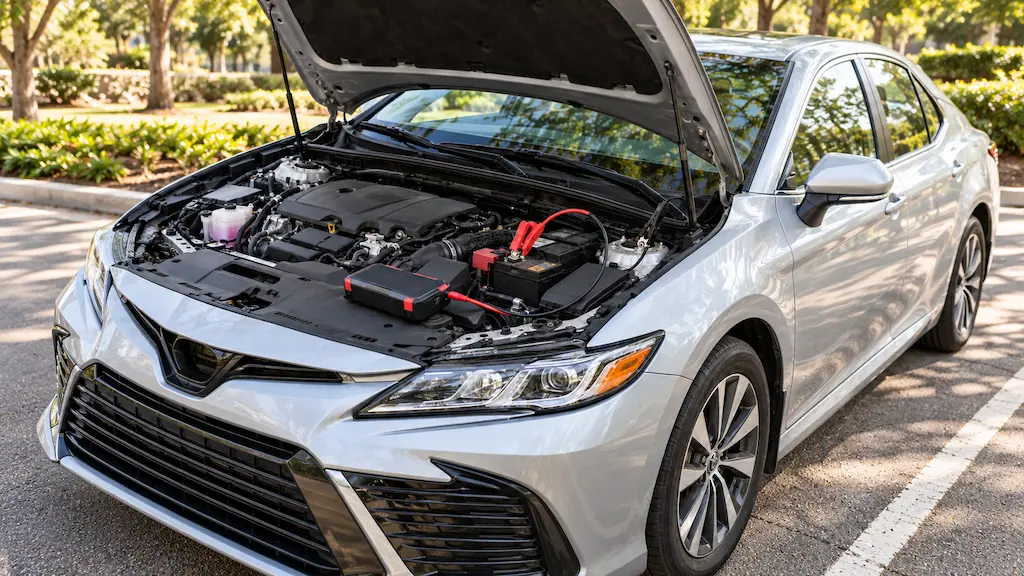
A portable jump starter pack skips the need for a second vehicle entirely and is worth keeping in the trunk if you drive an automatic regularly. These devices follow the same connection principle as cables, positive to positive and negative to a grounded metal point, but the power source is a self-contained battery pack rather than another car.
- No need to track down a second driver willing to help
- Many packs double as phone chargers or air compressors
- Compact enough to store in the glovebox or trunk without taking up much space
The main thing to watch is keeping the pack charged, since a jump starter with a dead battery of its own is obviously no help at all.
What to Do If the Jump Start Doesn’t Work
Sometimes the car cranks but won’t catch, or it doesn’t crank at all even with the donor car running. This usually points to something beyond a simple flat battery.
- A battery that’s old or damaged may no longer hold enough charge even with help
- A failing alternator means the car won’t stay running for long even if it starts
- Corroded or loose terminals can prevent enough current from reaching the engine despite a proper connection
If the jump start fails after two attempts, it’s safer to stop and call for professional roadside help rather than repeatedly draining the donor car’s battery too.
Common Mistakes to Avoid When Jump-Starting
A few avoidable errors cause most jump-start problems, and they’re worth knowing before you’re standing in a parking lot trying to fix things quickly.
- Connecting the clamps in the wrong order or to the wrong terminals, which can damage the car’s electronics
- Letting the red and black clamps touch each other while connected, which can cause sparking
- Jump-starting a battery that’s visibly swollen, cracked, or leaking, which should be replaced rather than charged
- Assuming hybrid and EV batteries can be jumped the same way as a conventional 12V battery, when most hybrid and electric vehicles have complex electronics that can be damaged by jump-starting them like a standard car.
Preventing a Dead Battery in an Automatic Car
A little routine maintenance goes a long way toward avoiding this situation altogether. If your automatic keeps needing a jump every few weeks rather than this being a one-off, it’s worth reading up on the common causes of a car battery dying overnight, since the same issue parasitic drain, heat stress, or an aging battery are usually behind repeat failures.
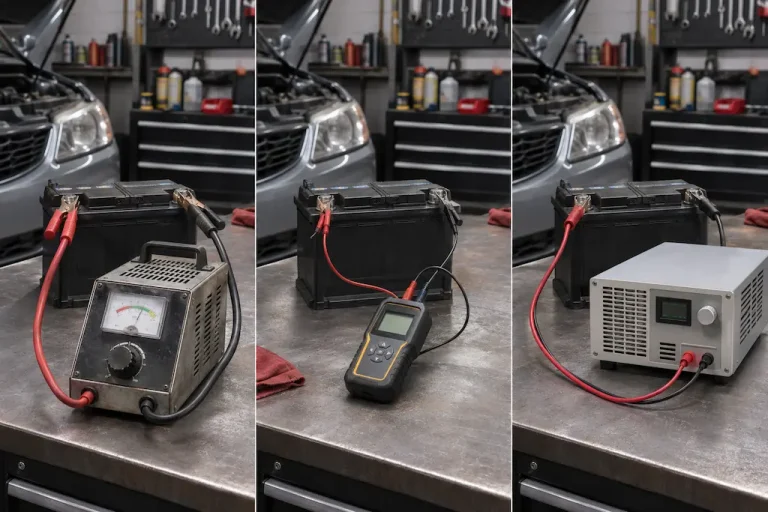
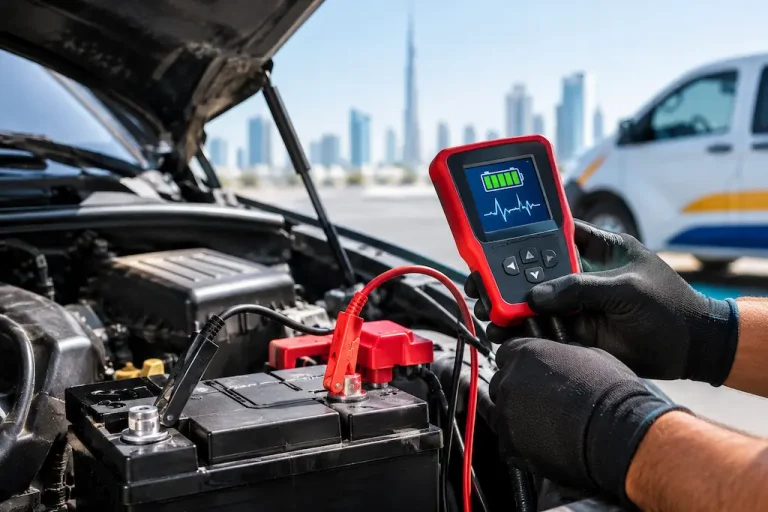
- Have the battery tested once it passes the three-year mark, rather than waiting for it to fail
- Keep terminals clean and free of corrosion buildup
- Avoid leaving accessories or interior lights on after parking
- Get an on-site battery health check periodically, especially before road trips or Dubai’s peak summer heat
Conclusion
A dead battery in an automatic car isn’t the same problem as it is in a manual, since push-starting simply isn’t an option. A jump start, done carefully and in the right order, gets most drivers back on the road within minutes, but it’s worth remembering that a jump start treats the symptom, not always the cause. If the same car keeps needing a jump, or a hybrid or EV is involved, getting the battery and electrical system properly checked is the safer long-term fix.
Frequently Asked Question
Can I push-start an automatic car if I’m on a slope?
No. Unlike manual cars, automatics don’t have a clutch connecting the engine to the wheels, so rolling downhill won’t turn the engine over regardless of the slope.
Is it safe to jump-start a hybrid or electric car myself?
It’s not recommended. Hybrid and EV electrical systems are more complex than a standard 12V setup, and jump-starting them incorrectly can cause expensive damage, so professional assistance is the safer choice.
How long should I drive after a jump start?
At least 30 minutes of driving, rather than idling, gives the alternator enough time to properly recharge the battery.
What if the car still won’t start after jumping it twice?
That usually points to a failing alternator, a battery too far gone to hold a charge, or a wiring issue, and it’s best handled by a technician at that point rather than repeated jump attempts.
Do I need a specific type of jumper cable for automatic cars?
No, standard jumper cables work the same way regardless of transmission type. What matters more is cable gauge and condition, not whether the car is automatic or manual.