One of the most common surprises for new electric and hybrid owners is discovering that a car with a nearly full drive battery can refuse to power on at all. The cause is almost always a small, conventional 12V battery that has nothing to do with propulsion.
Two batteries, two jobs
- The high-voltage drive battery moves the car. It is large, sealed, and not something anyone should be connecting leads to.
- The 12V auxiliary battery runs the electronics: the door locks, the dashboard, the contactors that connect the drive battery in the first place.
If the 12V battery is flat, the car cannot complete its wake-up sequence. The drive battery may be at 80 percent and it makes no difference, because nothing is there to switch it on.
How it shows up
- The car does not respond to the key or the app
- Doors will not unlock, or unlock but nothing else happens
- The dashboard stays dark, or lights briefly and dies
- The vehicle reports a 12V system warning shortly before failing
Hybrids behave the same way. Hybrid Toyota and Lexus models, among others, use an auxiliary battery that can fail independently of the hybrid system.
Why it needs care
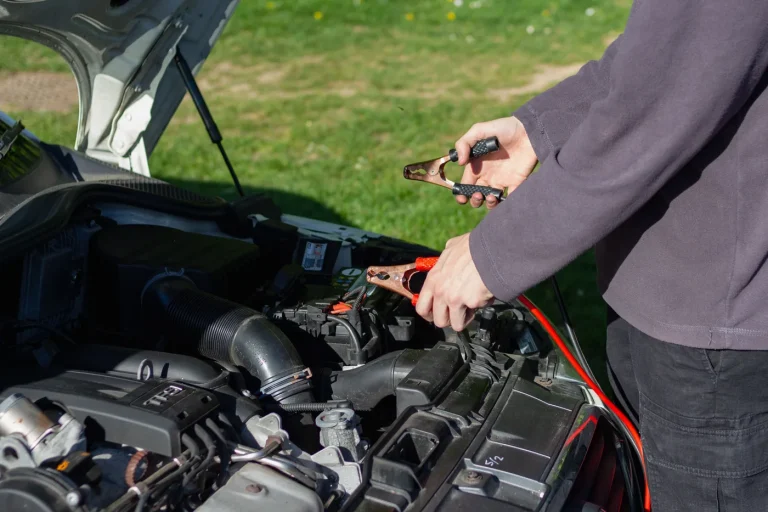
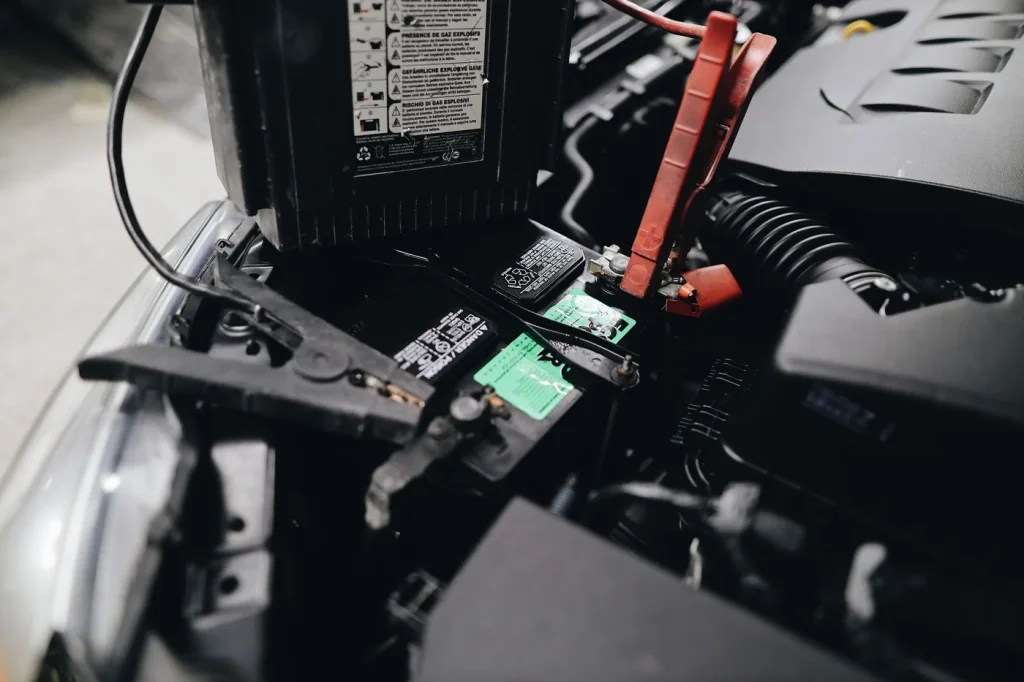
Jump starting a 12V auxiliary battery is a routine job, but it is not identical to jump starting a conventional car:
- The correct connection points are often not the battery itself. Many EVs provide a dedicated jump terminal in the front compartment or fuse box.
- The auxiliary battery is frequently an AGM type, which tolerates a different charge profile than a standard flooded battery.
- Voltage spikes from crude equipment can damage control modules that are expensive to replace.
This is why calibrated equipment matters more on an EV than on an older petrol car. Getting the engine running is not the only success criterion; leaving the electronics untouched is the other.
What you should not do
Do not attempt to jump the vehicle from an EV. Most manufacturers explicitly prohibit using an electric car as the donor vehicle, because its 12V system is not designed to supply that current. And never connect anything to the high-voltage battery or its orange cabling.
After the jump
A 12V auxiliary battery that has gone flat once will often do it again. If it will not hold a charge, replacing it on the spot is the difference between a solved problem and a repeat call-out tomorrow.
Quick Jump Start services 12V auxiliary batteries on EVs and hybrids with equipment calibrated to avoid damaging high-voltage systems, and can replace the auxiliary battery on site. See the full list of brands and vehicle types we cover.