It’s 6:40 on a Sunday morning. The car started fine on Thursday. Today there’s one click, then nothing. The dashboard lights up, but the engine doesn’t turn over. The driver checks for lights left on, checks the doors, and finds nothing.
Nothing was left on.
Most drivers assume cold weather kills batteries. In Dubai, the opposite is the everyday reality: sustained heat is the harder test, and it can weaken a battery quietly until the morning the engine won’t start.
What that morning actually represents:
-
The battery had been losing capacity throughout the summer, not overnight.
-
It still held enough charge for warm starts and short trips.
-
Sunday was simply the first time it was asked for more than it had left.
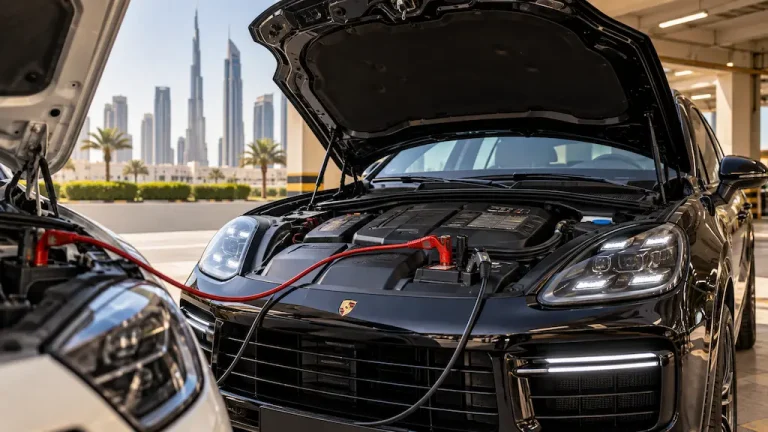
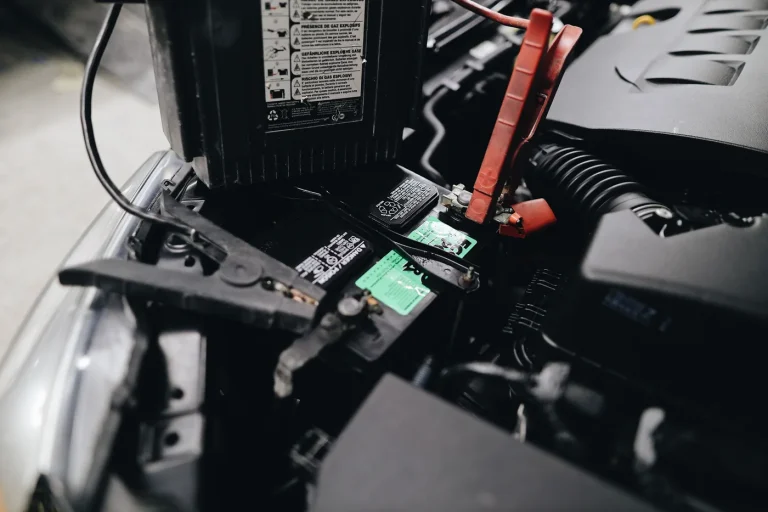
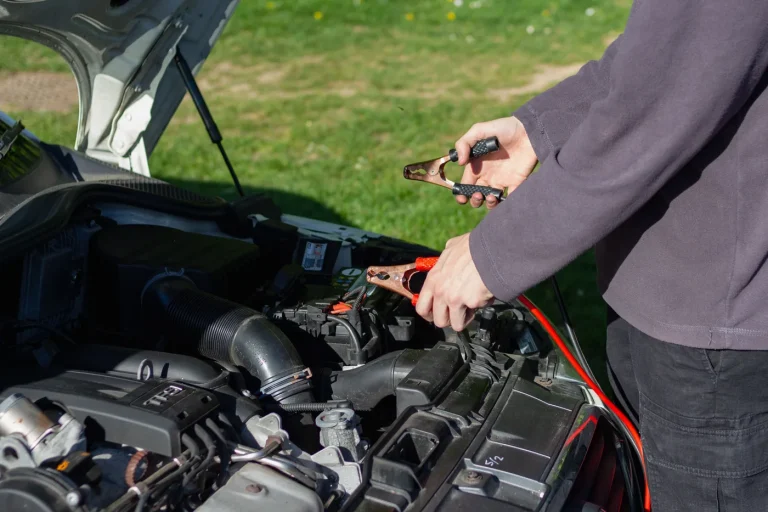
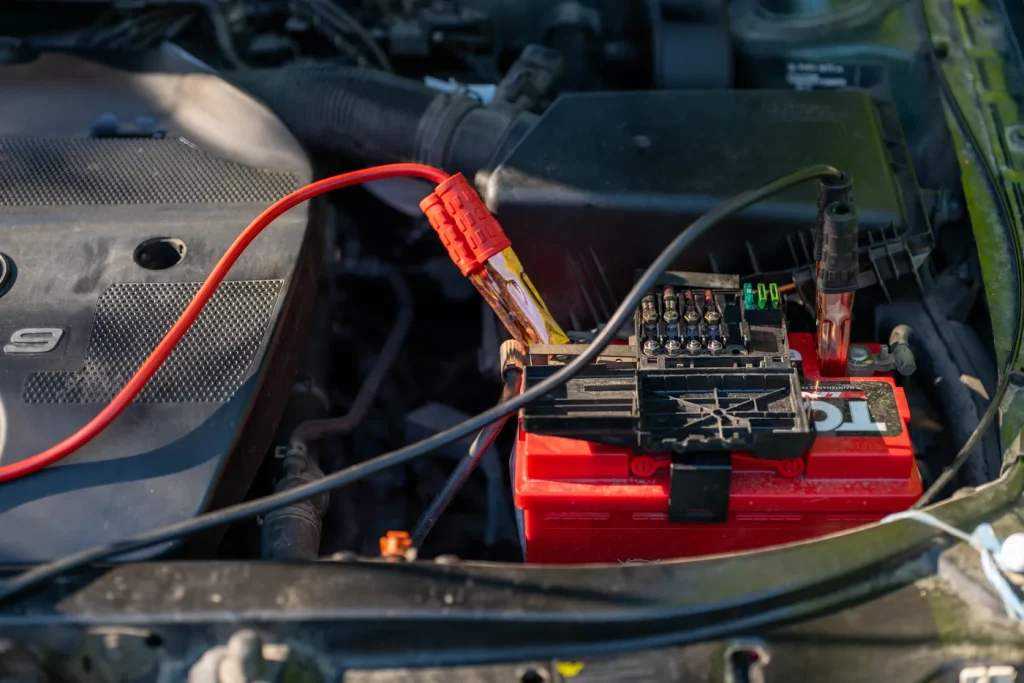
If you’re stuck at that point, a quick jump start service in Dubai can get the car running again, but a jump start only addresses the immediate problem. The battery may still need testing or replacement.
This guide covers what heat does inside a battery, the warning signs that can appear before it leaves you stranded, and how to tell whether you need a jump start or a replacement.
What heat actually does inside the battery
A lead-acid battery works through a chemical reaction, and heat speeds that reaction up. Faster sounds useful. It isn’t, and it comes with three costs.
| Effect | What happens | Reversible? |
|---|---|---|
| Fluid loss | High under-bonnet temperatures evaporate water from the electrolyte, exposing the plates | No-exposed plates lose capacity permanently |
| Internal corrosion | Heat accelerates breakdown of the grids that carry current | No-doesn’t recover when the weather cools |
| Higher electrical load | Air conditioning at full output for months keeps steady demand on the charging system | Yes, but it leaves no headroom for a weak battery |
As a general industry rule of thumb, battery life roughly halves for every 8–10°C rise in sustained operating temperature above 25°C. That’s why batteries in the Gulf commonly last two to three years where the same unit in a temperate climate might run four or five.
Under-bonnet temperatures are the real number, not the forecast. On a 45°C afternoon in Dubai, the engine bay sits far hotter, and it stays hot long after the car is parked.
The result is a battery that tests fine at moderate load and then fails to deliver the large, brief current an engine needs to crank.
Why the failure feels so sudden
A battery rarely announces itself. It holds enough charge to start a warm engine on a short trip, then drops below the cranking threshold after sitting overnight or after a long spell parked at the airport.
That’s why so many call-outs cluster first thing in the morning and in long-stay car parks. Two conditions overlap — the battery is cold-soaked after hours of inactivity, and it’s being asked for its hardest single job of the day.
The battery didn’t fail this morning. It failed gradually over the summer.
Warning signs worth acting on
- The engine cranks slowly, or clicks instead of turning over
- Dashboard lights flicker or dim during starting
- Headlights look weaker than they used to
- The car is noticeably harder to start after sitting overnight
- Electronics cut out while the engine idles
Any one of these justifies a battery health check. Several together usually means the battery is near the end of its usable life, and the question is when it strands you rather than whether.
There’s a seasonal pattern worth knowing too. Batteries weakened through the peak summer months often fail once the cooler mornings arrive, because the small margin the heat had left them disappears.
What actually helps
You can’t change the weather, but a few habits genuinely extend battery life here.
| Habit | Why it works |
|---|---|
| Park in shade or underground | Reducing peak under-bonnet temperature is the single biggest lever available |
| Avoid strings of very short trips | Starting uses a large charge; a five-minute drive may not replace it |
| Keep terminals clean and tight | Corrosion and looseness mimic a dead battery and take minutes to fix |
| Test before a long absence | A marginal battery won’t survive weeks parked at the airport |
| Switch everything off before shutdown | AC, lights and accessories drawing on restart add load the battery doesn’t need |
The airport one catches people repeatedly. A battery that’s coping with daily use has no reserve for three weeks of standing in a hot car park, and travelers return to a car that won’t start at the worst possible moment.
Jump start or replacement?
This is the distinction that decides whether you’re back on the road or repeating the same morning tomorrow.
A jump start restores enough charge to crank the engine. It does nothing to repair a battery that has permanently lost capacity through fluid loss or grid corrosion.
- A jump start is enough when the battery drained from an external cause lights left on, a door ajar, a long idle period and the battery itself is still sound.
- Replacement is the answer when the battery has lost capacity. It will start once on a boost, then fail again after sitting.
Driving after a jump start matters as well. The alternator needs sustained running time to replace what the boost supplied, so a short hop home usually leaves you no better off.
Quick Jump Start carries out an on-site battery health check before any work, so you know which of the two situations you’re actually in rather than paying for a boost that won’t hold.
We reach most areas of Dubai within 15 to 30 minutes, 24/7, and we service every major car brand including EVs and hybrids.
Conclusion
Heat damage to a car battery is cumulative and invisible. Nothing on the dashboard reports it, the car keeps starting, and the first clear signal most drivers get is a click in a car park.
The practical takeaway is to stop treating the battery as a component that either works or doesn’t. It has a measurable state of health, that health declines every summer in this climate, and a test tells you where you stand long before you’re stranded.
If your battery is past two years old, or any of the warning signs above sound familiar, get it checked while it’s still a choice rather than an emergency.
Stranded now, or want a battery health check?
Quick Jump Start covers most of Dubai in 15 to 30 minutes, 24/7, with on-site testing and roadside replacement for petrol, diesel, hybrid and electric vehicles.
Frequently Asked Questions
How long does a car battery last in Dubai?
Typically two to three years, against four to five in cooler climates. Sustained heat accelerates the internal chemistry, and the damage accumulates rather than reversing in winter.
Can heat really damage a battery more than cold?
Yes. Cold makes a weak battery reveal itself; heat is what weakened it. Evaporation and grid corrosion both happen in high temperatures and neither is reversible.
Why did my car start yesterday but not today?
Because the threshold was finally crossed. A declining battery holds enough charge to start a warm engine on a short trip, then falls short after sitting overnight.
Will a jump start fix my battery?
Only if the battery is still sound and simply drained. If it has lost capacity through heat damage, it will start once and fail again after standing.
How long should I drive after a jump start?
Long enough for the alternator to replace the charge generally sustained driving rather than a short trip home. If the car won’t restart afterwards, the battery isn’t holding charge.
Does parking in the shade genuinely help?
It does, and it’s the most effective thing most drivers can control. Lower peak under-bonnet temperature directly slows the evaporation and corrosion that shorten battery life.
Should I test my battery before travelling?
Yes, particularly before leaving a car at the airport. A marginal battery that copes with daily use rarely survives weeks of standing in a hot car park.