Underground parking is where a lot of batteries finally give up, usually at the end of a working day. It’s also the least convenient place for it to happen: patchy phone signal, tight bays, and no obvious way to reach the car with another vehicle. A reliable jump start service in Dubai needs to work around all three of those problems, not just the dead battery itself.
Quick answer: Confirm it’s actually the battery, note your exact level and bay number, and call from wherever you still have signal, Quick Jump Start reaches most of Dubai in 15–30 minutes, including basement and multi-story parking, with pricing starting from AED 120 confirmed before arrival.
Why Basements Are Harder on Batteries in the First Place
It’s not a coincidence that so many dead batteries show up in underground parking specifically. Office basements and mall car parks are often where cars sit for the longest stretches between short drives a pattern that gives a weak battery less chance to recharge fully before the next demand on it. Add Dubai’s heat, which accelerates battery wear even below ground where the ambient temperature is cooler than the surface lot, and a battery that’s already on its way out tends to pick the most inconvenient moment to finally quit.
Work Through These in Order
- Check it’s actually the battery. Do the interior lights come on? Does the dashboard light up? Nothing at all, or a rapid clicking, points to the battery. A normal dashboard with the engine cranking strongly points somewhere else.
- Make sure the car is in Park or Neutral. Automatics won’t crank in Drive, and a worn gear selector switch can mimic a dead battery convincingly enough to fool most drivers.
- Try the spare key. A flat key-fob battery can prevent a push-button start from recognizing the key, this is a common false alarm that has nothing to do with the car’s actual battery.
- Look at the terminals. Visible corrosion, or a clamp you can move by hand, will stop the car starting even with a healthy battery underneath it.
- Note your level and bay number. This is the single most useful thing you can do before calling, it cuts the time to find you more than anything else on this list.
Signal Is the Real Obstacle
Basements are where calls drop. If you have any signal at all, make the call from where you’re standing rather than moving deeper into the car park looking for a better spot you might just lose the signal you already had. If you have none, walk up one level or to the ramp entrance, place the call, and give the level and bay number then. You don’t need to stay on the line after that, and you don’t need to walk all the way back to street level either.
Have this ready when you call:
- Building name and the car park entrance you used
- Level and bay number
- Vehicle make and model
- Whether the car is boxed in, or reachable from a driving lane
Vehicle make and model matters more than people expect. Battery type and location vary widely across brands, and some cars need a higher-capacity booster or a specific jump point rather than the standard battery terminals. This matters even more for electric and hybrid vehicles, a fully charged drive battery doesn’t help if the separate 12V battery has died, which is a scenario that confuses a lot of EV owners the first time it happens to them.
Why You May Not Need Another Car
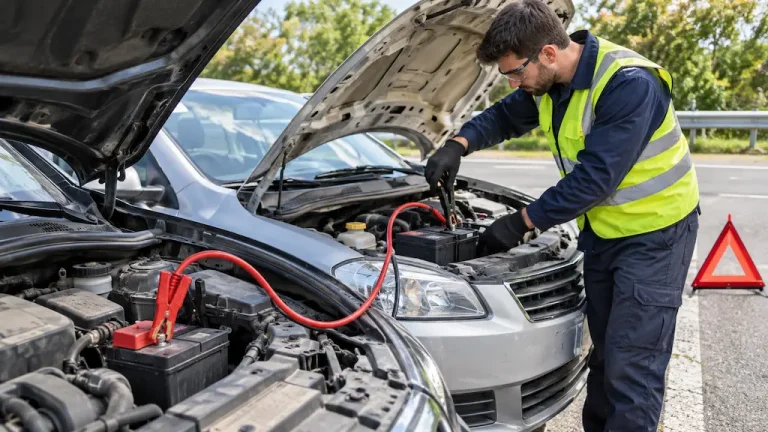
The traditional picture of a jump start involves two cars nose to nose, hazards on, bonnets up. In a tight basement bay, that’s often physically impossible, there’s simply no room to maneuver a second vehicle into position, and plenty of underground bays don’t have a free space next to them at all.
Professional portable jump starters remove the problem entirely. They deliver the required current without a second vehicle, run off their own internal battery pack, and can be carried on foot to a bay that a car or van could never actually reach. This is one of the clearer advantages basement breakdowns have over the old two-car method the equipment comes to the car, not the other way around.
A Word on Doing It Yourself
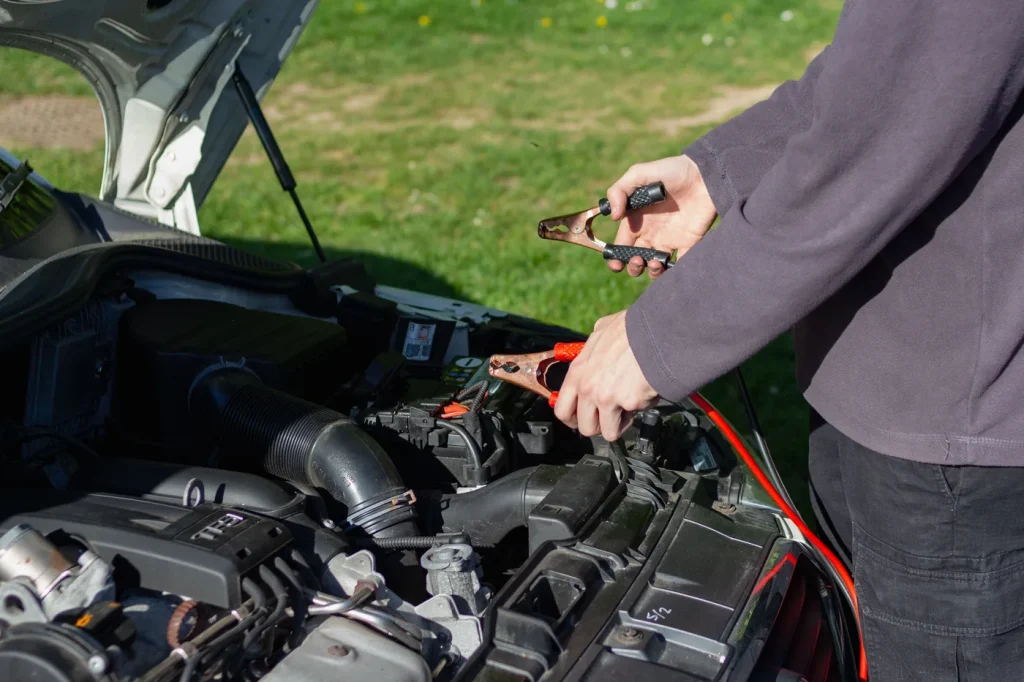
Jump leads connected in the wrong order can damage an alternator or an onboard computer, and modern vehicles are considerably less forgiving of mistakes than older ones were. A lot of today’s cars route sensitive electronics through the same circuits a jump start touches, so a reversed connection isn’t just a spark and an inconvenience the way it might have been on an older vehicle, it can mean a genuinely expensive repair bill on top of the dead battery you started with.
If you’re not confident about the correct sequence and the correct jump points for your specific car and in a dim, cramped basement bay, confidence usually drops rather than rises, it’s not worth the risk to the electronics for the sake of saving a call.
What to Expect When Help Arrives
A technician who already has your level, bay number, and vehicle details can usually locate the car quickly, even in a large basement structure. From there, the process is straightforward: confirm the fault is actually the battery rather than something else on this list, connect the portable unit at the correct points for that vehicle, and get the engine running. If the fault turns out not to be a simple dead battery, a failing alternator, for instance, that gets flagged on site rather than discovered after you’ve already paid for a battery that wasn’t the problem.
Conclusion
A dead battery in underground parking isn’t a harder problem than one in an open lot it’s the same fault in a worse location. The things that actually matter are confirming it’s the battery, giving an exact level and bay number, and getting signal out before the call drops. Get those three right, and the jump start itself is usually the easy part.
Frequently Asked Questions
Does it cost more to get a jump start in underground or basement parking?
No, pricing starts from AED 120 regardless of location, and it’s confirmed before the technician arrives, not adjusted after the fact once they see where the car is parked.
What if I can’t get any phone signal at all in the basement?
Walk up one level or toward the ramp entrance until you get a signal, place the call there, and give your level and bay number, you don’t need to stay in that spot once the call is placed.
Can every car be jump-started with a portable booster?
Most vehicles, yes, portable jump starters cover every major brand, though the correct jump point and required capacity vary by make and model, which is why confirming your vehicle details on the call matters.
Why does my battery seem to die more often when I park in the same basement spot?
Consistently short trips and limited recharge time between them wear down a battery faster, and a basement space often means the car sits longer between uses than one parked at a house or villa, it’s usually a sign the battery itself is aging, not something specific to that parking spot.